
Positive selection (discover binders)
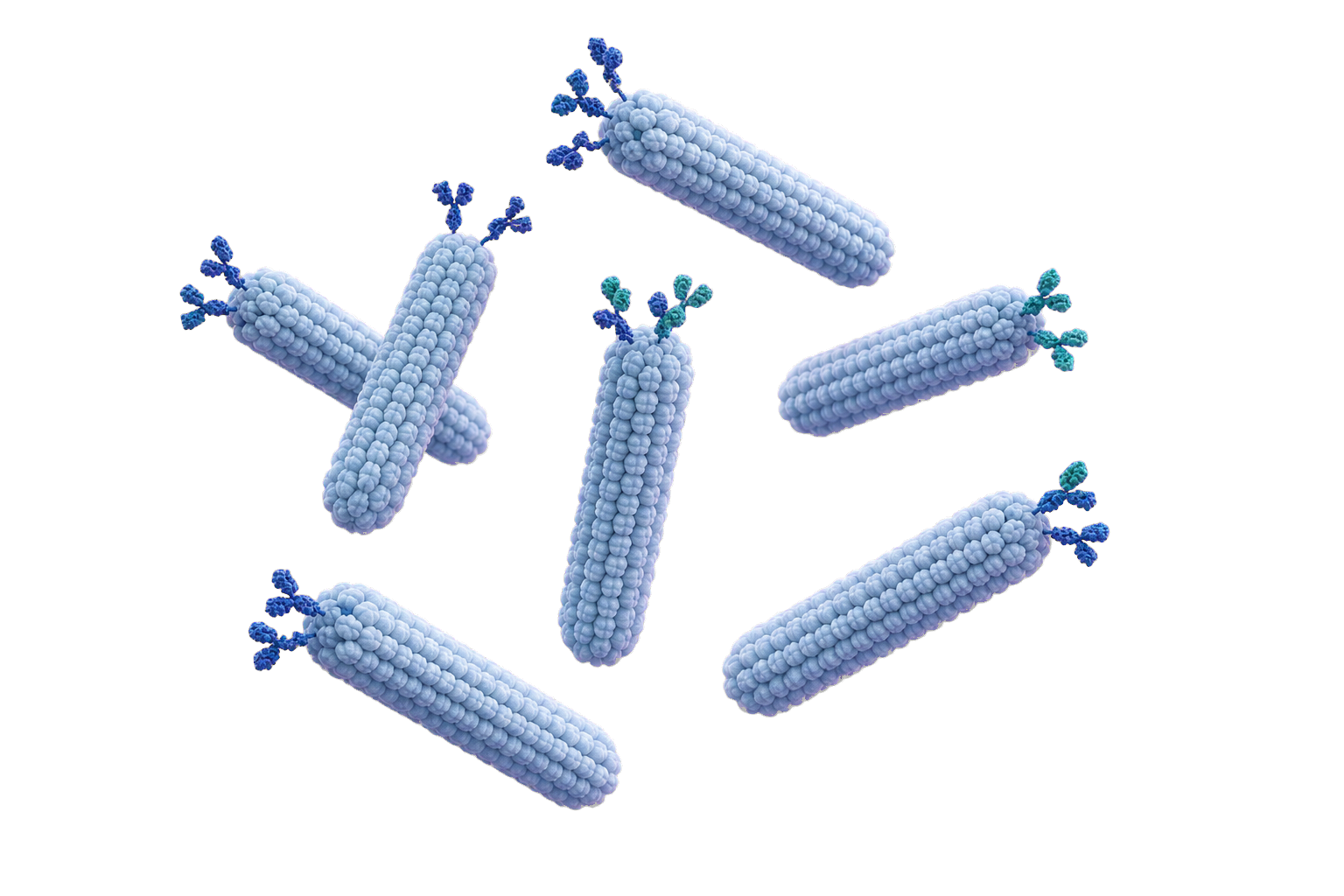
Phage library
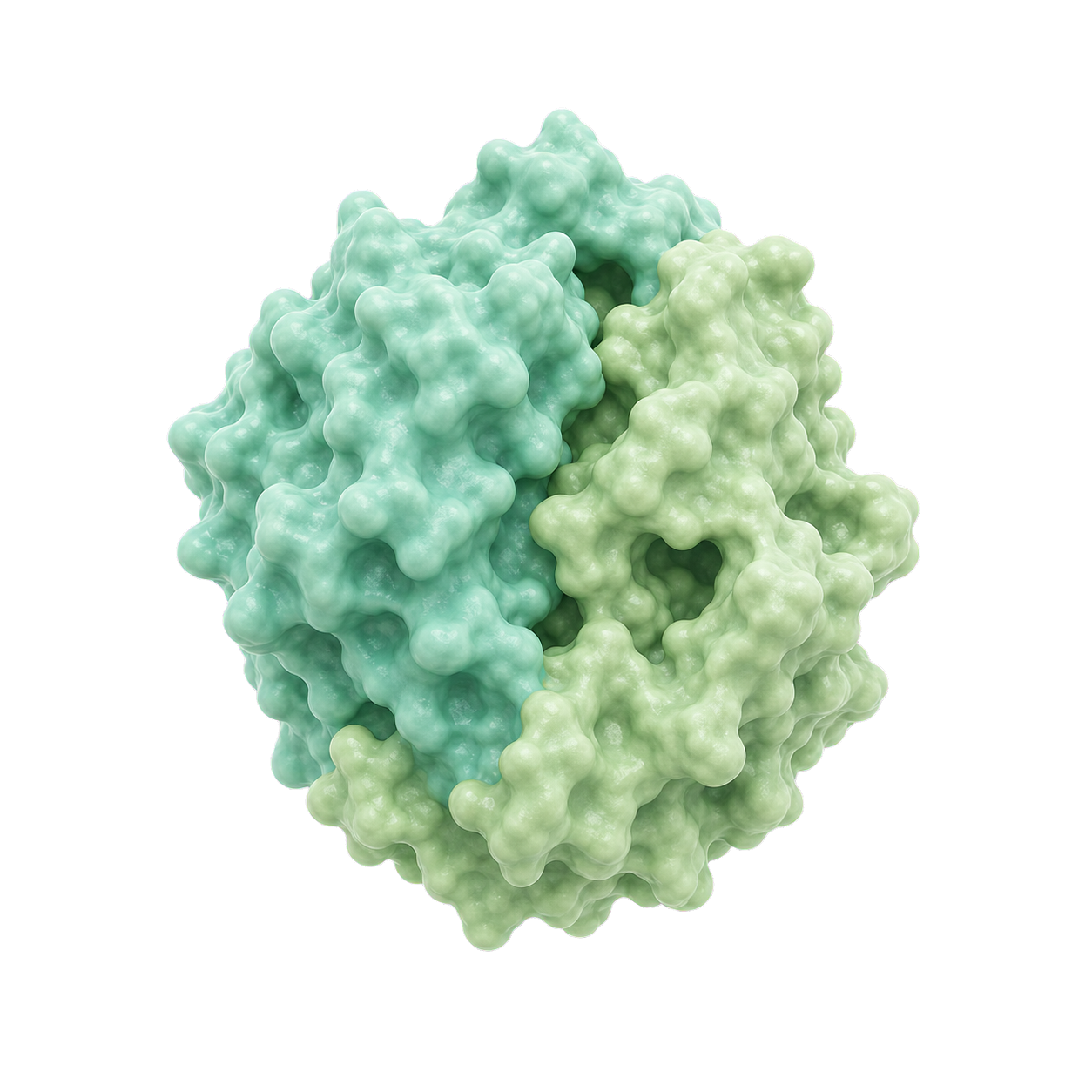
Target antigen
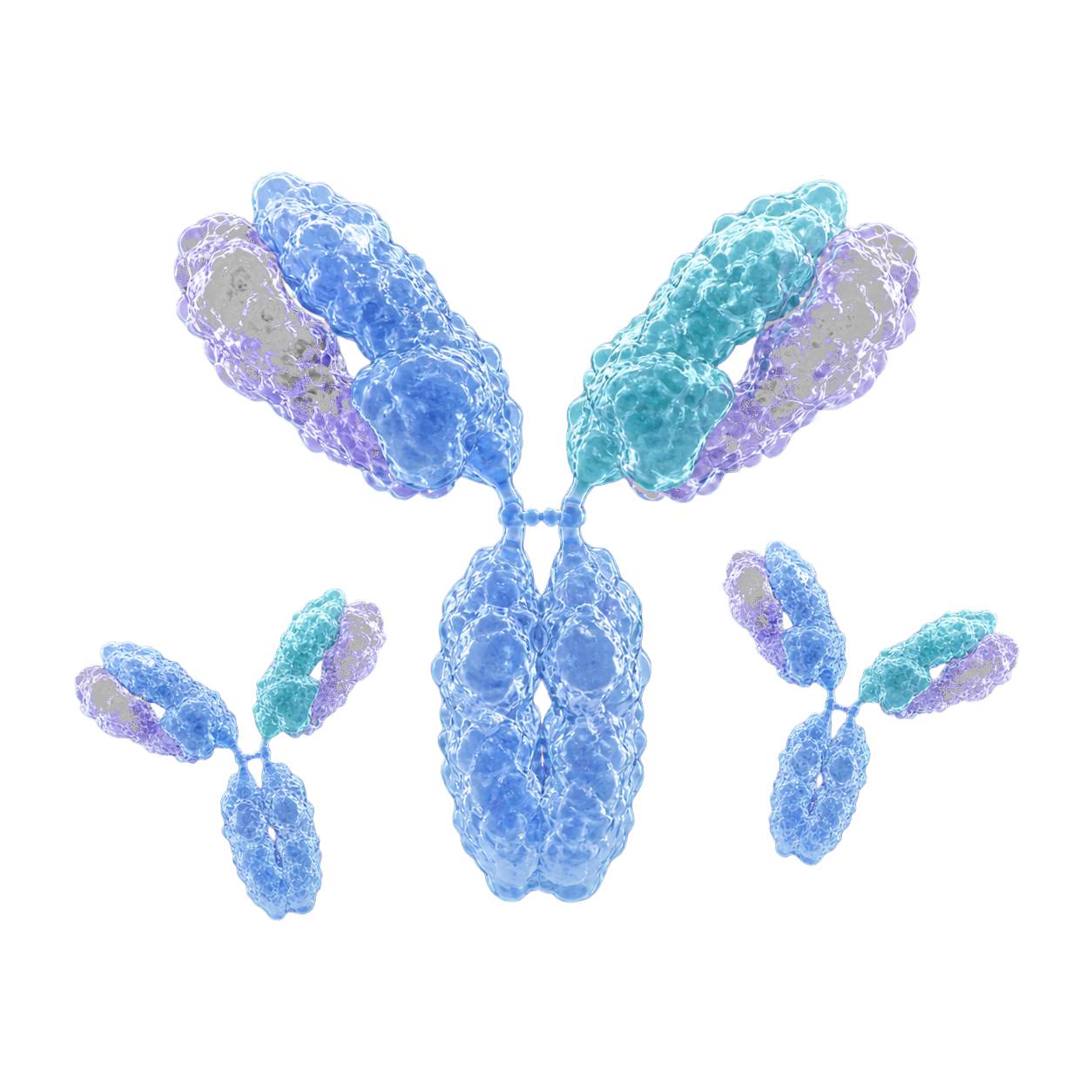
Specific binders
- Multiple panning rounds progressively improve specificity
- Enrichment trends support strategy assessment
- Retain diverse positive clones for sequencing
Phage display antibody discovery
Evidence retained from selection strategy through candidate sequences
Using phage-displayed antibody libraries, we combine antigen presentation, positive enrichment, counter-selection and progressive stringency to identify candidates with the intended binding profile.
Projects can extend to sequence clustering, monoclonal verification, affinity and functional assessment, creating a traceable basis for antibody engineering and production.
Service overview
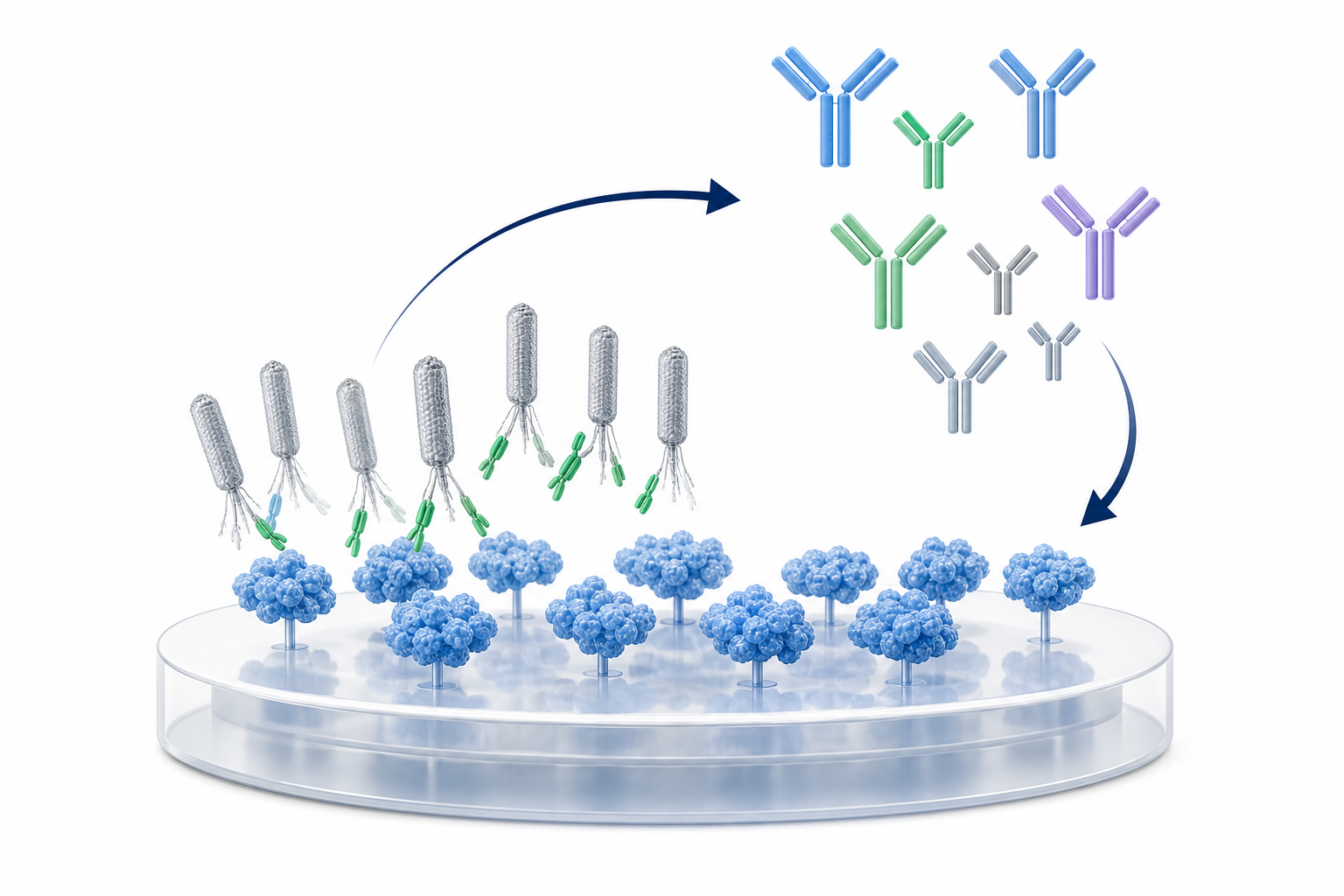
A selection framework combining positive enrichment and counter-selection according to antigen format, background risk and downstream use.
Phage library
Target antigen
Specific binders
Carrier / homologue
Target-specific clones retained
Carrier / tag binders removed
An evidence-led antibody selection system.
Antigen format, epitope intent, cross-reactivity boundaries and downstream use are aligned before selection.
Target enrichment is combined with counter-selection against tags, carriers, homologues or non-target cells.
Selected antibody fragments remain linked to their sequences for deduplication, clustering and representative candidate selection.
Binding, specificity and function can be assessed across complementary assay platforms.
Expression and purification can be connected across antibody formats for downstream validation.
Raw data and analysis are retained at each decision point for review and downstream development.
Five steps with clear execution records and stage outputs.
EXECUTION
Align antigen, epitope intent and application; identify tag, carrier and homologue risks.
OUTPUT
Assessment record; selection framework
EXECUTION
Choose solid, solution or cell-based presentation; prepare controls and counter-selection materials.
OUTPUT
Presentation plan; experimental design
EXECUTION
Incubate, wash, elute and amplify; adjust stringency and monitor enrichment.
OUTPUT
Round records; enrichment trends
EXECUTION
Test monoclonal binding against controls; sequence, deduplicate and cluster families.
OUTPUT
Positive clone list; sequence clusters
EXECUTION
Retest and rank candidates; compile raw data, conclusions and next steps.
OUTPUT
Candidate shortlist; data package and report
Antibody phenotype and encoding sequence are linked on the same phage particle, enabling iterative binding, washing, elution and amplification.
Multiple rounds are common, but enrichment, background and clone diversity determine whether the strategy continues or changes.
Purified proteins, domains, peptides, cells or other agreed formats may be used depending on conformational and validation needs.
Blocking, pre-adsorption, counter-selection, competitive elution and progressively stringent washing can be combined with controls.
Scope is confirmed at project start. Sequence files and clustering can be supplied, while annotation and reformatting can be planned separately.
Yes. Candidates can proceed to production, affinity, competition, cross-reactivity and goal-specific functional assays.