
Pattern recognition and initial sensing
Identify pathogen- and damage-associated signals through surface and intracellular pattern-recognition receptors.
Explore pathwayTLR / RLR / NLRPAMP / DAMP
Explore pathogen sensing, myeloid-cell regulation, inflammatory mediators and complement cascades for mechanism studies and target evaluation.

Identify pathogen- and damage-associated signals through surface and intracellular pattern-recognition receptors.
Explore pathwayStudy phagocytic recognition and immune regulation in macrophages, monocytes and dendritic cells.
Explore pathwayConnect cytokine release and inflammatory amplification with downstream innate-immune experiments.
Explore pathway
Antibodies and immune complexes
C1 · C4 · C2
Glycan pattern recognition
MBL · Ficolin · MASP
Microbial and altered surfaces
Factor B · Factor D · Properdin
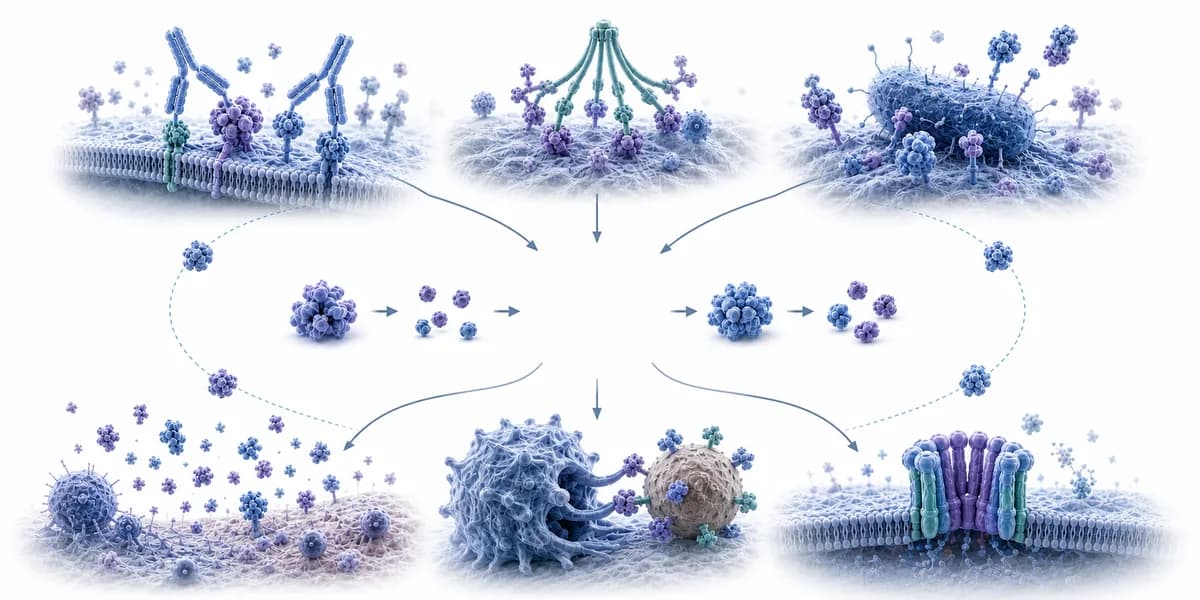
C3 / C5 convergence hub
C1 inhibitor · CR1 / CD35 · Factor H / Factor I · CD46 / CD55
C3a and C5a support inflammatory-cell recruitment and signal amplification.
C3b marks target surfaces for immune-cell recognition and clearance.
C5b–C9 forms an effector pore on the membrane surface.
Review available information before selecting a product.